What is this?

Hi! My name is Ulrik, and this is my student blog. My posts will be based on tasks and subjects given to the class by my English teacher Ann. I am currently in my third year at Sandvika High School, Norway.

Thursday, October 24, 2013

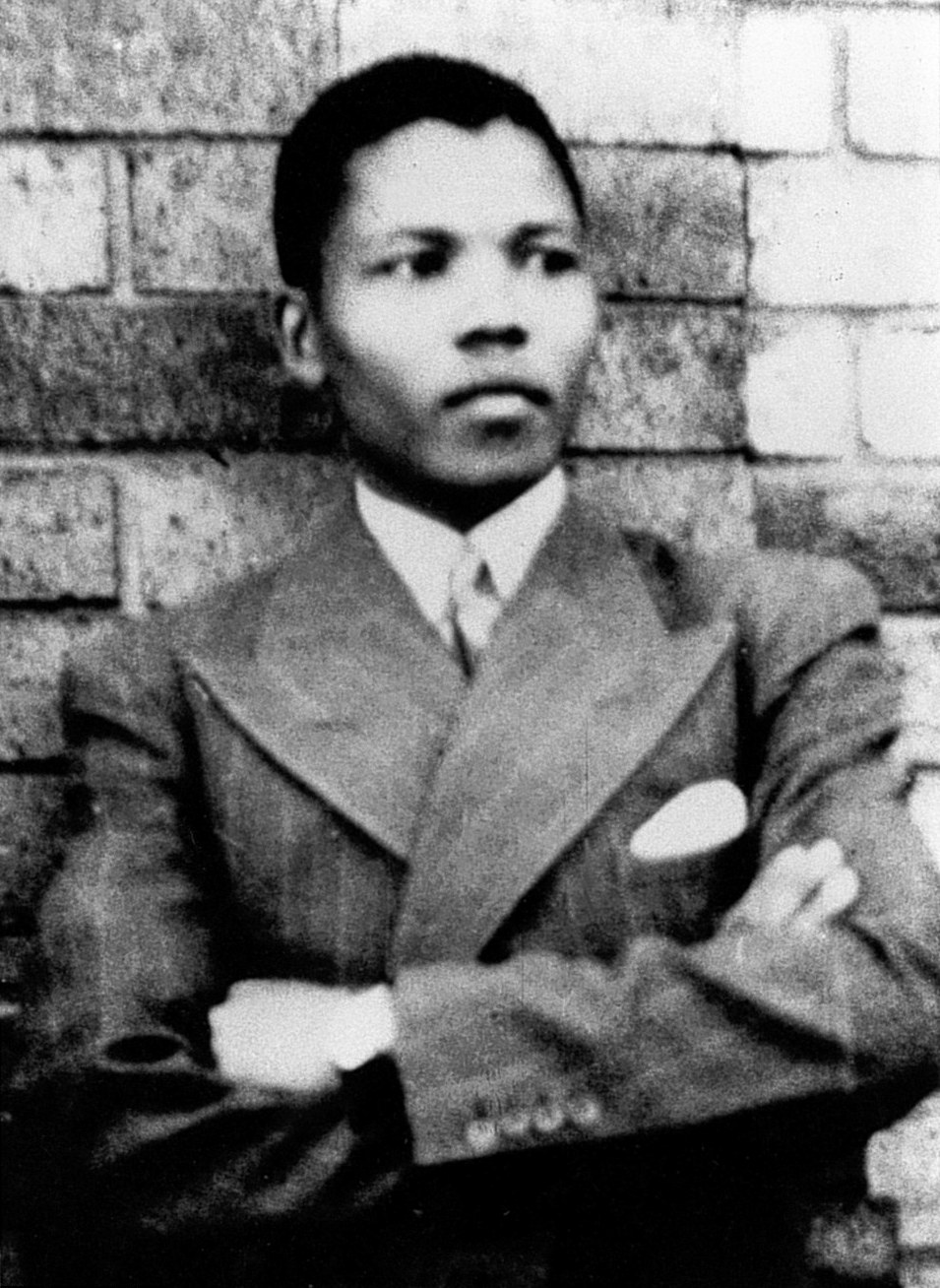
Nelson Mandela- before his imprisonment

Everyone has heard about Nelson Mandela- the man who conquered apartheid, and became the first black president i South Africa. When he was released from prison, after 27 years, he became the leader of ANC(African National Congress), and started negotiations with the president in order to abolish apartheid- the negotiations ended with an multiracial election in 94, which ended with victory to Mandela and the ANC. His story after his release and election is well known- but what was his life like before his imprisonment?

The start of Mandela's political activism

Mandela was born in 1918- but I will start in 1940. After getting to know that an marriage had been arranged for him, Mandela fled to Johannesburg, where he worked in the mines- getting his first sight of "South African capitalism in action". He was later fired, because he was a runaway. In Johannesburg, he befriended ANC activists, and members of the communist party. He did, however, not become a member because of the party's atheistic beliefs, and the fact that he saw the struggle in Africa as an racial conflict, not a class struggle. When studying law later on, he became friends with several other liberal, white, communist Europeans, and he also became a member of the ANC. Mandela did however still believe that the fight for political self-determination should be done by blacks only, not involving the communist party. In order to mobilize the youth, African National Congress Youth League was founded in 1944- and Mandela became a member of the executive committee.

The 1948 election

In the whites only, general election of 1948, the National Party came to power. Clearly racists, the new government expanded racial segregation with the new apartheid legislation. Mandela, who had worked his way upwards gaining more influence in the ANC, started together with his fellow members, to advocate and take direct actions towards apartheid- such as strikes and boycotts. With a new, more militant, board coming together in the ANC, the organisation moved towards a more revolutionary path. In 1949, Mandela became much more involved in politics, and as a result of this he failed his final year at the university, and was thrown out.

The road towards a more violent path

In 1950, Mandela became president of the ANCYL, and he argued against a united front with the communists- however, he was outvoted, and at some point he changed his view on things completely. His mistrust towards communism broke down, and he was heavily influenced by Karl Marx, Lenin, Mao etc. In 1952  ANC started their Defiance campaign- encouraging people to ignore the apartheid laws. In protests, supporting the ANC, 8500 protesters were arrested- after the campaign, ANC's membership grew from 20.000 to 100.000. Later on the same year, Mandela and 20 others were arrested under the new "Suppression of communism act", and sentenced to hard labour.
in 1955, Mandela asked the ANC leader to request weapons from China- so that the ANC could start guerilla warfare

Umkhonto we Sizwe- Spear of the Nation

In 1961, with inspiration from Castro's 26th of July movement, and the Cuban revolution, Mandela co-founded Umkhonto we Sizwe(MK)- which over time became the armed wing of the ANC- with most of it's members being communists. Mandela and the other leaders of the MK decided to start with acts of sabotage directed at the government- especially military installations and power plants- with the use of bombings. They would do this at night, to avoid as much civilian casualties as possible. Mandela did however express, that if these tactics were to fail, they should move towards a more openly "guerilla warfare and terrorism".
In their first campaigns, they bombed a subway station- and on the 16 December  1961, they detonated 57 bombs- however few civilians were killed. Their attacks went on for 18 months- as a part of their campaign for a full constitutional change. In the later 60s, the MK were suppressed in South Africa, but they continued to exists outside of the country, fighting against the Rhodesian army, among other things. 

Mandela was however arrested in 1962, and was first accused of arranging worker strikes and other minor charges, but later on he was also accused of sabotage and guerilla warfare- risking death penalty. Outside of South Africa, Mandela had a huge amount of support- and the trial ended with him being sentenced to life imprisonment.

The MK continued with bombings directed towards the South African government until 1986, killing 130- of these 100 civilians, with over 60 of them being black. In 1994, after the fall of apartheid, the MK was integrated into the South African Army.


Wednesday, October 9, 2013

Peace One Day

Jeremey Gilley is an actor, a filmmaker, and the founder of Peace One Day. A non-profit organisation that wants to make, well, peace in the world. We were lucky enough to have a Skype meeting with him in our class, where he told us about the project.

Peace One Day was founded in 1999, with the idea of having one day of non-violence, ceasefire around the world. Gilley sat down with many powerful people, such as Dalai Lama, Nelson Mandela and the UN-Secretary Kofi Annan, and they made a resolution for the UN. It was presented in 2001 by Great Britain and Costa Rica in the UN, and was adopted. The 21 of September would be the official Peace day.
The first years, nothing major happened with peace day. But in 2007 a ceasefire was accepted for one day in Afghanistan, and the Taliban agreed not intervene when the UN and the Afghan government gave 1,4 million children polio-vaccination, in areas normally unreachable due to the war.
This year, more than 600million people was aware of Peace-day. And what Gilley said, was that peace day is not only about war, but also about your home, and your personal life. Surveys reveal that when you know about peace day, you will behave less violent on that day. Peace day has become a great international event, and in 2016 Gilley think 3 billion people will be aware of the day. If people think of peace, it will be peace!

Tuesday, September 17, 2013

Think before you act!

thinkb4u is a very informative website that definitely learned  me a thing or two. On the website you learn about the dangers on the web, by following a family through videos. After each video, you are given a question, and the next video reflects your answer.
The following paragraph is from the about page, and it gives you a clue of what answers you'll find

As more of our life happens online, Internet skills are crucial to living responsibly. What are the skills needed to navigate today’s Internet society? How can parents and educators teach themselves, their families, and their communities about important topics like identity protection, fraud detection, and digital citizenship?

Not only is the site informative, it has a beautiful design as well. It's easy to understand, and there is something for everyone. By experience I would say adults probably are in most need of this site though. Everyone can learn something, but adults are often struggling most with the internet norms! 

Tuesday, September 10, 2013

Visit from the Norwegian minister of foreign affairs

On Tuesday 03.09.13,  the minister of foreign affairs, Espen Barth Eide(Labour party), visited our school. Well over 200 students gathered in the gymnasium, where a stage was set. Eide then had a long presentation about Norway's foreign politics, and our role in the world's global issues, with focus on the ongoing conflict in Syria. 

The Syrian civil war

Eide opened with informing that he had just arrived from a meeting with other northern foreign-ministers, explaining that they dictated a letter, as an appeal, to the UN security-council, demanding that the UN must deal with the fact that chemical weapons has been used in the conflict. He also stated that Norway has a responsibility to react to the use of chemical weapons He would however, not answer to what kind of reaction he had in mind when asked, other than mentioning different possibilities, such as sanctions or a military intervention. With Afghanistan still fresh in mind, Norwegians are sceptic to an intervention without UN-mandate, and Eide did express this in some way. He also stated that there has been to little focus on the foreign-politics in the election campaign, which unfortunately for Eide ended with conservative victory yesterday, 09.09.13. 

Norway's role in the world

During his presentation, Barth Eide expresses his concerns with the possibilities(now reality) of a conservative victory. Not only because he would loose his job, but because Norway's role in the world would get significantly smaller. Norway has had an important role in the negotiations between Israel and Palestine, the conflict on Sri Lanka and the conflict with FARC in Colombia among others. With a new government, he said, we would probably be much more EU, and less UN oriented. This could mean the end of negotiations with both HAMAS and FARC, which are both considered terrorist organizations by the EU. The new conservative government has also promised to cut much of development aid, which he also expresses his concerns for. However, unlike Norway's diplomatic role, development aid has been discussed much in the media. Nevertheless it's a fact that with the new government soon in place, Norway's international role will change. If that's a good or a bad thing, you will have to decide on your own.

Monday, September 2, 2013

They stood up

This week we watched the movie "Erin Brockovich". It tells the true story about the fight against PG&E, a massive energy-corporation, which was responsible for leaking poison into the drinking water, making lots of people sick. It ended with PG&E loosing in court, having to pay hundreds of millions of dollars to the victims. Erin Brockovich has become a symbol in the fight against big corporations, and a proof that one person can make the bad guys pay. However, she did not do it alone. She had the help of lawyers, and financial help to make the case come through. But, i guess you need help if you are going to change something. Now, I will write about three other figures in history, all of whom stood up against something bigger than themselves.


I'll start with a picture we all have seen. Perhaps the very symbol of this subject. The tank-man, as he is known as, stepped out and blocked a Chinese tank-column on the day after the army had suppressed the Tiananmen square protests(June 4, 1989). His fate is unknown, except that he was dragged away by two men in blue attires.

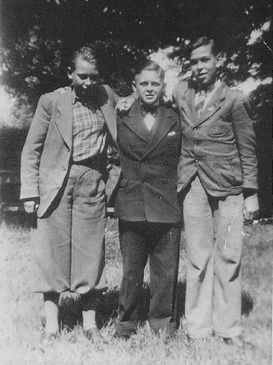
Helmuth in center
The second person in my post is Helmuth Hübener, leader of the "Hübener gang". Helmuth was born in 1925 in Germany, and did as every other youth did, he joined the Hitler Youth. But, as the years went by, he started to question the Nazi-regime. The Kristallnacht, in particular, made an impression on him. In 1941 he started listening to enemy broadcasts, and together with some friends, he started writing down the British programs and making pamphlets, which were distributed in Hamburg.
However, in 1942 he was discovered translating pamphlets into french by his colleague at work, who was a NSDAP member. He was reported to Gestapo, and arrested. He was sentenced to death by the People's court in Berlin, and after the sentence had been given, he said to the judge:
"Now I must die, even though I have committed no crime. So now it's my turn, but your turn will come." Helmuth was executed by guillotine two months later.


The last person i will mention is Ehren Watada. He is not as famous as the persons above, and that's the point. I feel he needs to be mentioned, because he did something that probably required a lot of strength at the time.
He was the first officer in the US army to refuse deployment in Iraq. He said the war was illegal, and that by participating in it, he would be part in war crimes. He was offered deployment in Afghanistan instead, but refused that as well. He also refused a desk job in Iraq, to show that it was not about getting away from combat.
Watada ended up being court-martialed, charged with desertion and "conduct unbecoming an officer and a gentleman". The judge said that the question could not be solved in the military justice system, and ruled a mistrail. After a second trial, not leading anywhere, the case was dismissed by the Justice Department, under the new Obama administration. Watada ended up being discharged from the army.


Wednesday, August 21, 2013

The Butterfly Circus

In our class this week we watched this: http://thebutterflycircus.com/short-film/ short film, created byJoshua Weigel andRebekah Weigel. The movie tells the story of a traveling circus, led by circus director Mendez, in the US, during the hard 1930s. When stopping by another circus' carnival, they meet a man with no limbs, named Will(played by Nick Vujicic). He his the main attraction, presented at a freak. After meeting Mendez, Will decides to leave the show, and join Mendez. However, Mendez does not want him to perform as a freak, but as himself. By accident, Will learns how to swim, and this becomes part of his new act where he jumps from a pole, down into a water tank.


The point of this movie, is to show that all people deserves a chance. Will's life probably got saved by Mendez and his circus. Instead of being laughed at, he got to do something that made people look up to him. He was no longer a freak, but a talent. This is something that's often forgotten in our society. All people are the same, and everyone should be given a chance, 

Tuesday, August 20, 2013

Hi again!

Aight.. So this is my second year at Sandvika High, and this year I have chosen many of my new subjects. So, in addition to the mandatory subjects, I will learn History and Philosophy, Politics and Human Rights, and of course, more English! This also means that I will start writing on this blog again, which is great!

So for this years first post, we have been given the task to write about "Being young in Norway, an my expectations for this school year".
I could write about young people in general, but that would be like "we go to school, some of us work, and we hang out with friends", which of course could be interesting, but I will write a little bit about my life as a young person in Norway as well. 

I live not far from Oslo with my family, or my two families that is, since my parents are divorced. I am 17 years old, and to be honest life is going great! In my spare time I do hang out with friends, but I am also practicing archery, and I am active in politics. In few weeks there will be an election here in Norway, so I am quite busy in the weekends with political work. But, I don't think most young people in Norway are doing what I am doing, so I am hardly a part of the norm. But who is, right? I mean, Norwegian youth are doing everything from just hanging out with friends, playing soccer, to politics. Personally I think being young in Norway is great!
This summer I was in Crete, and at my party's political summer camp, which was awesome(short summary). Unlike many countries in Europe Norway is doing it well economically, which means Norwegians travels all around the world during our summer vacation. But, now the vacation is over, and it's back to school! I think this year will be great, and filled with exiting days and really interesting subjects. I am looking forward to it, and my expectations are high!